In This Guide
If you've tried kava for the first time and felt... nothing, you're not alone. In fact, this experience is so common that the kava community has a name for it: reverse tolerance. Unlike almost every other substance where tolerance builds up over time, kava actually becomes more effective the more you use it.
This comprehensive guide will explain everything you need to know about kava reverse tolerance - the science behind it, what the research says, and practical advice for getting through the initial "break-in period."
What Is Reverse Tolerance?
Reverse tolerance (also called "sensitization") is the phenomenon where a substance becomes more potent over time with regular use, rather than less potent. This is the opposite of how most substances work.
With alcohol, for example, regular drinkers need more alcohol to feel the same effects - that's standard tolerance. With kava, many first-time users report minimal effects initially, but after several sessions, the same amount of kava produces much stronger effects.
Many kava newcomers try it once, feel nothing, and never return. If they had persisted for just a week or two, they would have discovered what kava enthusiasts have known for centuries.
This makes kava truly unique among psychoactive substances. While researchers don't fully understand why this happens, several compelling theories exist.
The Science Behind Kava Reverse Tolerance
Several biological mechanisms may explain why kava exhibits reverse tolerance. Here are the leading theories:
Theory 1: GABA Receptor Sensitization
The most widely accepted theory involves changes to your brain's GABA receptors. GABA (gamma-aminobutyric acid) is the primary inhibitory neurotransmitter in your nervous system - it's what tells your brain to calm down.
The Science
Kavalactones interact with GABA-A receptors at a different binding site than benzodiazepines or alcohol. Research suggests that repeated kava exposure may cause these receptors to become more sensitive to kavalactones, or may increase the number of receptor sites that respond to kava's active compounds.
Unlike alcohol and benzodiazepines, which directly activate GABA receptors and lead to tolerance (and dependence), kavalactones appear to modulate GABA activity in a way that enhances sensitivity over time.
Theory 2: Kavalactone Accumulation
Another theory suggests that kavalactones may accumulate in body tissues over time. Kavalactones are fat-soluble compounds, meaning they can be stored in fatty tissues and released gradually.
According to this theory, initial kava sessions build up a reservoir of kavalactones in your body. Once sufficient levels accumulate, subsequent doses add to this baseline, producing more noticeable effects.
Theory 3: Liver Enzyme Adaptation
Your liver processes kavalactones using specific enzymes. Some researchers theorize that these enzymes may need time to "learn" how to metabolize kavalactones efficiently, or that the liver may need to produce more of certain enzymes before kava's effects can be fully realized.
Theory 4: Neuroplasticity and Learning
A more recent theory involves neuroplasticity - your brain's ability to reorganize itself. This theory suggests that your brain may need multiple exposures to kava before it "learns" how to respond to kavalactones properly.
Just as your brain learns to process new sensory experiences, it may need time to develop the neural pathways that recognize and respond to kava's unique effects.
What Research Tells Us
While reverse tolerance is well-documented anecdotally, formal scientific research on this specific phenomenon is limited. However, several studies provide relevant insights:
GABA Receptor Studies
Research published in the journal Psychopharmacology has demonstrated that kavalactones bind to GABA-A receptors at sites distinct from benzodiazepines. This unique binding profile may explain why kava doesn't produce the same tolerance patterns as pharmaceutical anxiolytics.
A 2004 study by Boonen et al. examined kavalactone interactions with various neurotransmitter systems and found that different kavalactones affect GABA receptors through multiple mechanisms, supporting the theory that kava's effects are complex and may require receptor adaptation.
Pharmacokinetic Research
Studies on kava pharmacokinetics (how the body processes kava) show that kavalactones are indeed fat-soluble and can persist in the body. Research by Mathews et al. found that peak kavalactone levels occur 1-2 hours after ingestion, with a half-life of approximately 9 hours for kavain.
This relatively long half-life supports the accumulation theory - if you're using kava daily, kavalactone levels may build up before the previous dose is fully eliminated.
Traditional Knowledge
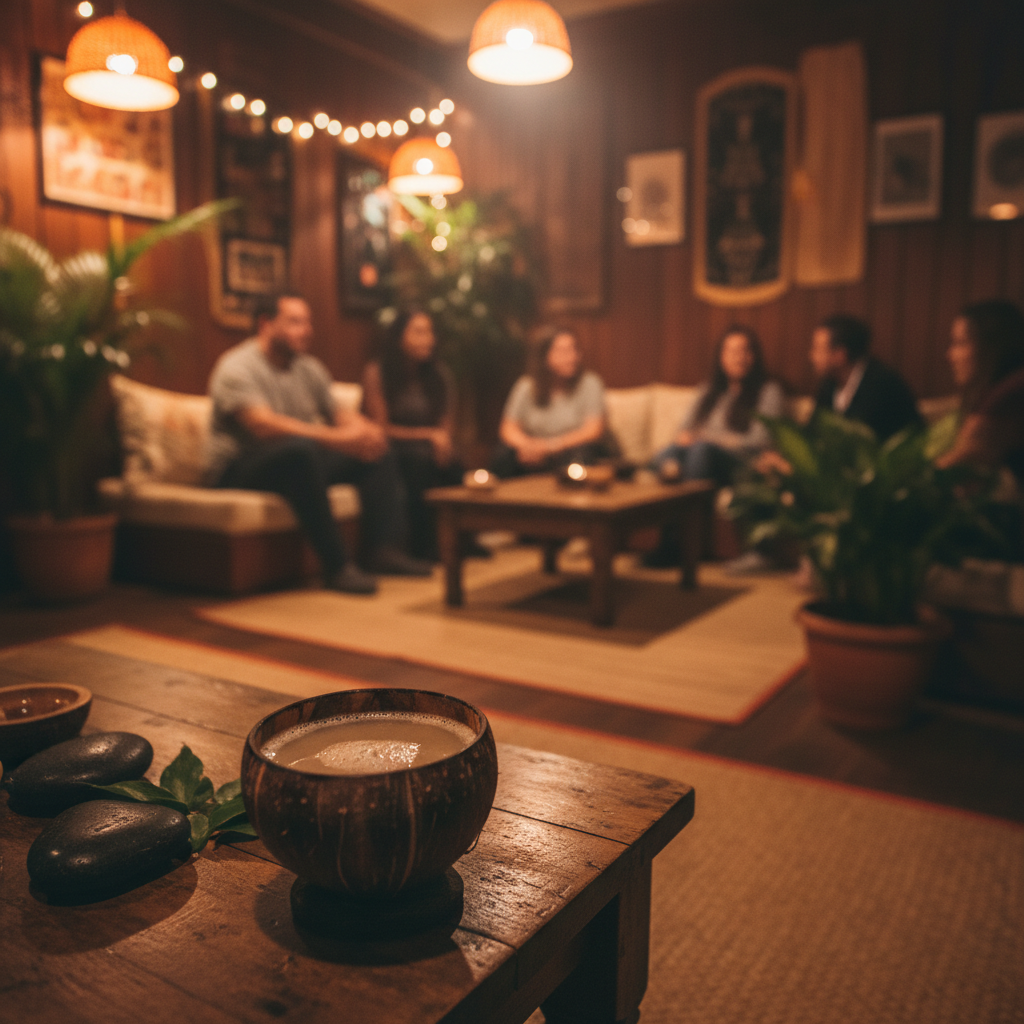
Pacific Island cultures have observed reverse tolerance for centuries. Traditional kava ceremonies often involve multiple shells (servings) because experienced practitioners understand that the effects build progressively. This traditional knowledge aligns with modern observations about reverse tolerance.
Key Takeaway
While formal research specifically on reverse tolerance is limited, the scientific evidence we have supports the mechanisms proposed by the kava community. The unique pharmacology of kavalactones - particularly their interaction with GABA receptors - provides a plausible explanation for why kava behaves differently than other substances.
Anecdotal Evidence & Community Wisdom
While scientists continue to study reverse tolerance, the kava community has accumulated decades of collective experience. Here's what regular kava users report:
The Typical Timeline
Most kava users report that reverse tolerance resolves within 1-2 weeks of regular use. Here's a common progression:
- Sessions 1-3: Minimal effects, possibly just lip numbness and slight relaxation
- Sessions 4-7: Effects begin to emerge, though still subtle
- Sessions 7-14: Full effects become apparent - this is often called "breaking through"
- Beyond 2 weeks: Effects remain consistent; no further tolerance development
Common First-Time Experiences
New kava users frequently report:
- Feeling the lip and tongue numbing (a sign the kava is working)
- Mild physical relaxation without the expected mental effects
- Wondering if they prepared it wrong or got "bad kava"
- A subtle sense that "something is different" without being able to pinpoint what
The "Breakthrough" Experience
Many users describe a distinct moment when reverse tolerance ends. Common reports include:
- Suddenly feeling the full effects after a session that seemed like any other
- Realizing in hindsight that earlier sessions had more effect than initially recognized
- A pronounced wave of relaxation and mental clarity that wasn't present before
I tried kava three times and was about to give up. On my fourth session, it suddenly clicked. Now I understand why Pacific Islanders have used this for thousands of years.
Practical Advice for New Kava Users
Understanding reverse tolerance can make or break your kava experience. Here's how to navigate the break-in period successfully:
Be Patient and Consistent
The most important advice: don't give up too soon. Commit to drinking kava regularly (3-5 times per week) for at least two weeks before making any judgments about whether kava works for you.
Use Proper Dosing
During the reverse tolerance period, don't dramatically increase your dose hoping to "force" the effects. Instead:
- Start with a standard serving (about 2-4 tablespoons of medium grind kava, or follow product instructions)
- Wait 20-30 minutes between shells if drinking multiple servings
- Keep your dose consistent to allow your body to adapt
Optimize the Setting
Even subtle kava effects are easier to notice when you:
- Drink on an empty stomach (food can reduce absorption)
- Sit or lie down in a comfortable, quiet environment
- Avoid stimulants like caffeine
- Pay attention to your body - subtle relaxation is still relaxation
Use Quality Kava
Make sure you're using noble kava from a reputable source. Low-quality or tudei kava can produce inconsistent effects and unpleasant side effects that may discourage continued use.
Pro Tip
Keep a simple journal during your first two weeks with kava. Note the time, amount consumed, and any effects - even subtle ones. Many users discover in hindsight that they were experiencing effects earlier than they realized.
Signs You're Breaking Through
Watch for these indicators that reverse tolerance is resolving:
- The lip numbing becomes more pronounced
- You notice a warm, relaxed feeling spreading through your body
- Mental chatter quiets down more noticeably
- Social interactions feel easier and more enjoyable
- Music sounds better and colors seem more vivid
Myths vs. Facts About Reverse Tolerance
Myth: Reverse tolerance means kava doesn't work for some people
Fact: Reverse tolerance is nearly universal among new kava users. Almost everyone experiences it to some degree. It doesn't mean kava won't work for you - it means you haven't used it enough yet.
Myth: You should take higher doses to overcome reverse tolerance
Fact: Increasing the dose during the reverse tolerance period is unnecessary and may cause digestive discomfort. Standard doses work; your body just needs time to adapt.
Myth: Reverse tolerance lasts months
Fact: For the vast majority of users, reverse tolerance resolves within 1-2 weeks of regular use. Some people break through even faster.
Myth: Once reverse tolerance ends, you'll need increasing amounts
Fact: Unlike alcohol, kava doesn't produce traditional tolerance. Once reverse tolerance ends, most users find their effective dose remains stable indefinitely. Many experienced kava users actually find they need less over time.
Myth: Reverse tolerance is just placebo
Fact: The consistency of reports across cultures and generations, combined with our understanding of kavalactone pharmacology, suggests reverse tolerance is a real biological phenomenon. It's too universal and predictable to be explained by placebo alone.
Frequently Asked Questions
For most people, reverse tolerance resolves within 1-2 weeks of regular kava use (3-5 sessions per week). Some users break through after just a few sessions, while others may take up to 3 weeks. Consistency is more important than the total number of sessions.
Most first-time kava users experience some degree of reverse tolerance, though the intensity varies. A small percentage of people feel full effects from their first session. Individual factors like body composition, sensitivity to kavalactones, and the specific kava variety used all play a role.
No, increasing your dose isn't necessary and isn't recommended. Your body needs time to adapt to kavalactones, not more kavalactones. Stick with standard serving sizes and trust the process. Once reverse tolerance resolves, you'll feel the effects without needing excessive amounts.
The sensitivity you develop is long-lasting. However, if you stop using kava for several months, some users report a mild return of reverse tolerance when they resume - though it resolves much faster the second time (often in just a few sessions).
Possibly. Some users report that "heady" kava varieties (those high in kavain) produce more noticeable early effects than "heavy" varieties. However, reverse tolerance appears to occur regardless of the kava variety used. The most important factor is using quality noble kava consistently.
First, verify you're using quality noble kava from a reputable source. Second, make sure you're drinking on an empty stomach. Third, commit to using kava consistently for at least two weeks. If you're doing everything right and still feeling nothing after 2-3 weeks of regular use, try a different kava variety - some people respond better to certain chemotypes than others.
The Bottom Line
Reverse tolerance is one of kava's most fascinating and unique properties. While it can be frustrating for newcomers, understanding this phenomenon is the key to getting the most out of kava.
If you're new to kava, remember:
- Reverse tolerance is normal and temporary
- Most users break through within 1-2 weeks
- Consistency matters more than dose size
- Use quality noble kava and drink on an empty stomach
- Once you break through, the effects remain consistent
Pacific Island cultures have used kava for over 3,000 years. They understood that kava reveals its gifts gradually - and that patience is rewarded with a uniquely pleasant, social, and relaxing experience unlike anything else.
Ready to begin your kava journey? Shop our premium noble kava and discover what generations of kava enthusiasts already know.